Product description

Having too much water pressure can be hard on all plumbing lines and fixtures and can even cause blowouts in flex lines or washing machine hoses, which in turn can flood the house.
Testing water pressure occasionally can catch a problem with the regulator before the high pressure can damage any plumbing.

The pressure level can vary in most residential homes. Normal water pressure is generally between 40 and 60 PSI, most homeowners prefer something right in the middle around 50 psi. Water pressure should not be higher than 60 PSI.


4.Check the Pressure
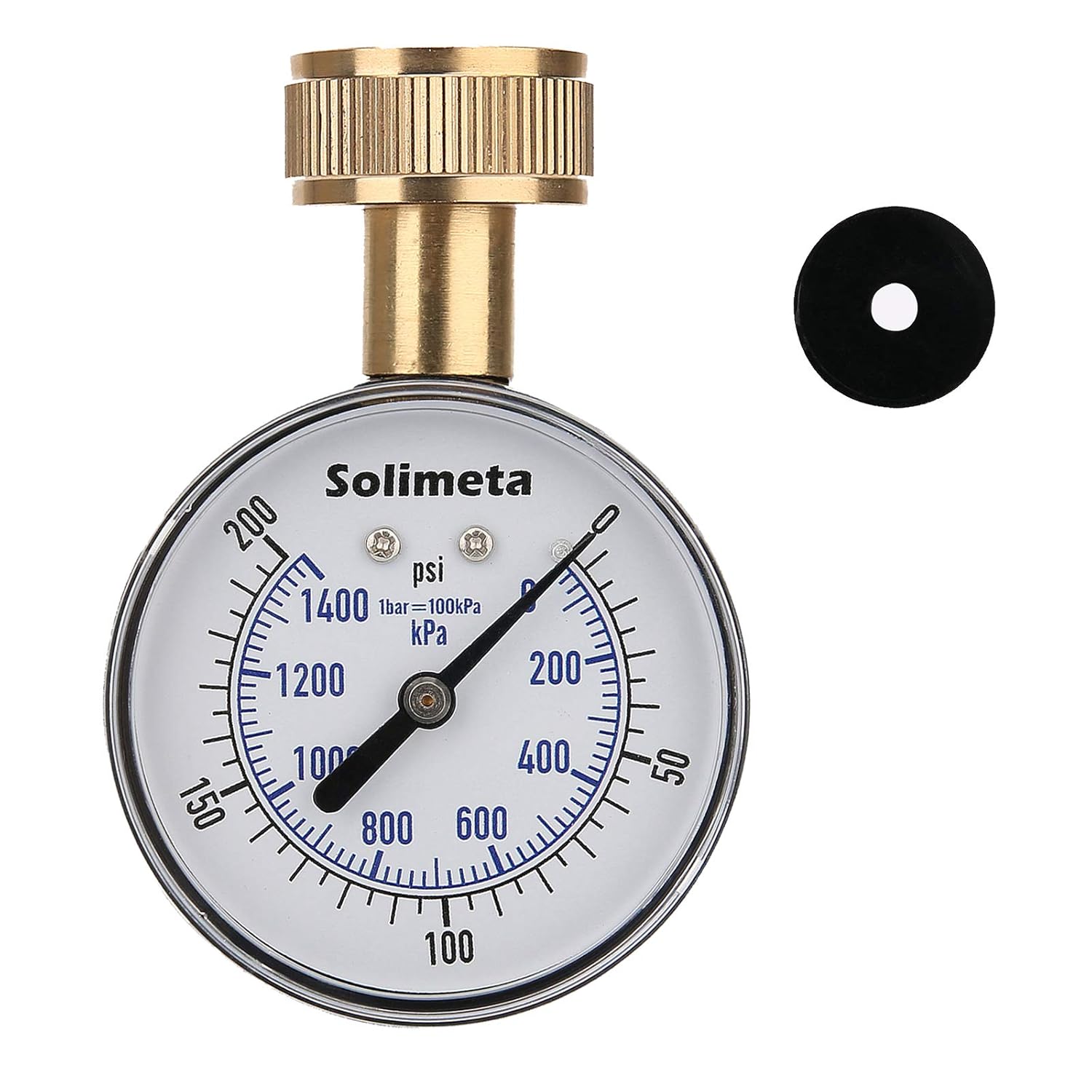
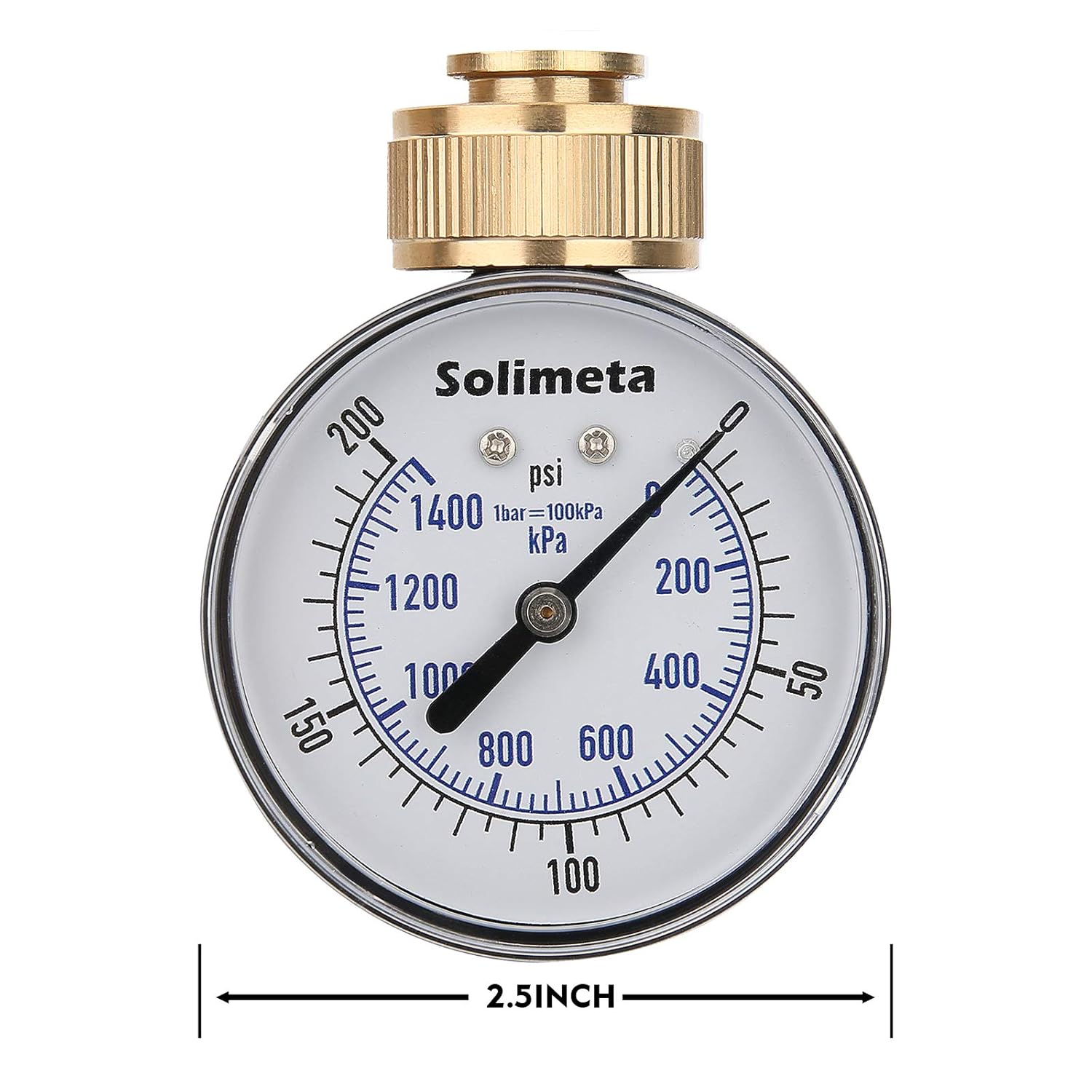
Turn the faucet all the way, and then read the pressure on the gauge's dial. Typical home water pressure ranges from 40–50 psi and generally should not exceed 60 psi. Most standard pressure regulators have a maximum adjustment up to 75 psi. So if the reading on the pressure gauge is over 75 psi, then you know that the pressure regulator is not working correctly and will have to be repaired or replaced
1. Choose the location
Select an outdoor hose spigot closest to where the home's main water supply line enters the house.
2.Check for Running Water
To get an accurate reading when you test water pressure, make sure water isn’t being used anywhere inside or outside the house.
3.Install the Pressure Gauge
Screw the pressure gauge onto the faucet. There will be a rubber gasket inside the pressure gauge, and you should be able to simply hand-tighten the pressure gauge to get a good seal.